LiveSense: Your Laptop's Wi-Fi Just Became a Drone's New Radar
Imagine your drone navigating complex environments not with expensive sensors, but with the same Wi-Fi chip in your laptop. LiveSense is making this a reality, transforming everyday tech into precision radar for centimeter-level sensing.
Forget expensive radar systems! LiveSense is a groundbreaking platform that turns ordinary laptop Wi-Fi cards into centimeter-level range-Doppler sensors, capable of real-time detection for distance, velocity, and even micro-motions. This opens up incredible possibilities for drone navigation and sensing, leveraging readily available commercial hardware.
🚀 Opening Hook
Imagine a world where your drone doesn't rely on bulky, specialized radar or LiDAR units to "see" its surroundings. What if it could navigate with precision, detect obstacles, and even understand gestures using something as ubiquitous as Wi-Fi? It sounds like science fiction, but thanks to a new platform called LiveSense, the Wi-Fi card in your everyday laptop is being transformed into a powerful, real-time sensing tool that could redefine how drones perceive the world.
🧐 The Problem
Autonomous drones need sophisticated ways to understand their environment. Traditional sensors like cameras, ultrasonic, or even more advanced LiDAR and radar systems each have their limitations – cost, size, power consumption, or performance in certain conditions (like low light or fog). While dedicated radar systems offer excellent range and velocity detection, integrating them onto small, consumer-grade drones is often impractical. The challenge has been finding a cost-effective, readily available, and powerful alternative that can provide crucial real-time spatial data, especially for precise ranging and motion detection.
💡 How It Works
LiveSense tackles this challenge by ingeniously repurposing the Wi-Fi Network Interface Cards (NICs) found in modern laptops. Specifically, it leverages Intel AX211 (Wi-Fi 6E) or Intel BE201 (Wi-Fi 7) NICs to extract highly detailed Channel State Information (CSI). Think of CSI as the "fingerprint" of a Wi-Fi signal as it travels through space, reflecting off objects.
The platform's innovation lies in three core capabilities:
- Synchronized CSI Extraction: LiveSense can pull fully synchronized CSI data at an impressive rate of 40 Hz or more. This rapid data stream is crucial for capturing dynamic movements.
- On-Device Processing: It performs sophisticated time-phase alignment and self-interference cancellation right on the laptop. This means the system can filter out its own signal and background Wi-Fi noise, focusing purely on reflections from targets.
- Real-Time Data Stream: All this processed data – including range, Doppler (radial velocity), subcarrier magnitude/phase, and even annotated video frames – is streamed in real-time to a user-friendly
Python/Qt Graphical User Interface (GUI).
This enables LiveSense to perform "Range-Doppler" sensing. While Wi-Fi's limited 160 MHz bandwidth typically makes accurate ranging difficult, LiveSense's advanced signal processing techniques overcome this hurdle, delivering centimeter-level precision.
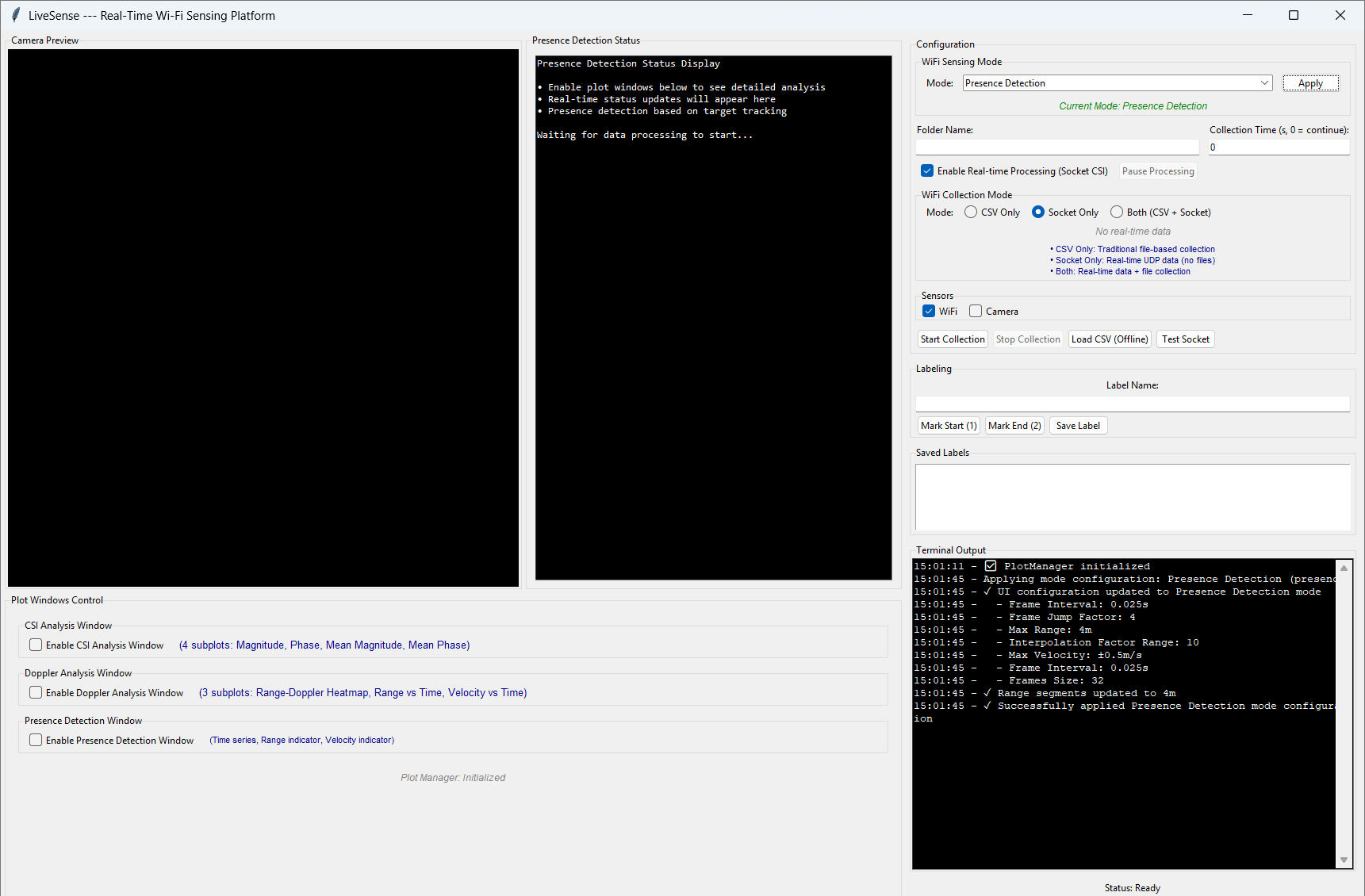 Figure 1: The LiveSense graphical user interface provides real-time insights into detected targets.
🎯 Key Results
The LiveSense platform isn't just a theoretical concept; it's a robust, working system demonstrating impressive capabilities:
- Precision Sensing: It can detect the distance and radial velocity of targets within a few meters with centimeter-level accuracy.
- Micro-Motion Detection: Beyond large movements, LiveSense can even pick up subtle micro-motions, such as human respiration – a remarkable feat for a Wi-Fi system.
- Gesture Recognition: Imagine controlling your drone with a simple hand wave! LiveSense can perform hand-gesture ranging, opening doors for intuitive human-drone interaction.
- Robustness: Even in challenging, busy environments like a cafe with heavy Wi-Fi traffic, LiveSense successfully resolved multiple distinct targets (e.g., 0.3m and 1m away), proving its resilience against environmental interference.
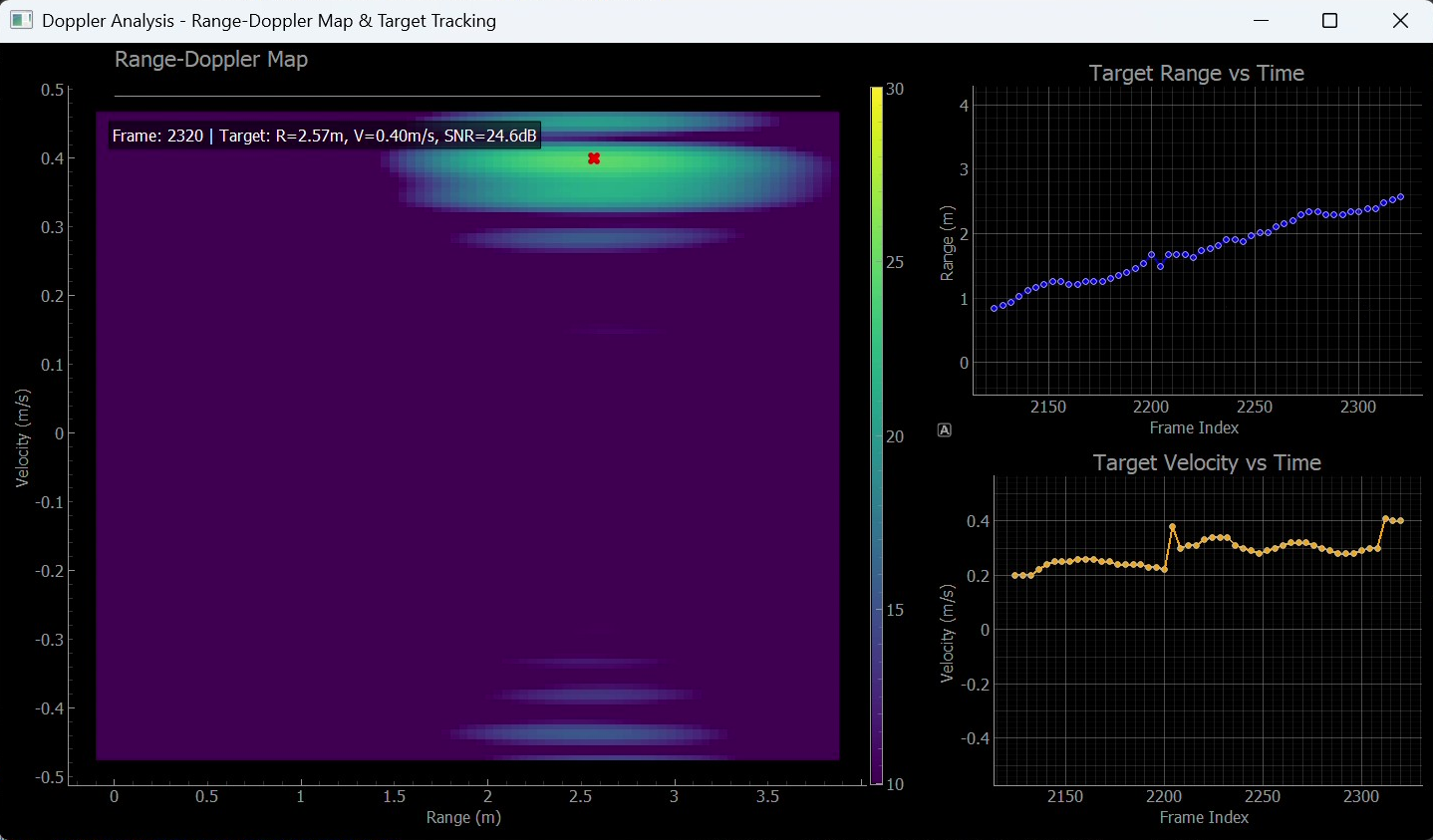 Figure 2: A real-time Range-Doppler heatmap from LiveSense, visualizing detected targets by their distance and velocity.
The researchers highlight this as "the first-ever demo to obtain accurate range information of targets from commercial Wi-Fi, despite the limited 160 MHz bandwidth." This represents a significant breakthrough, effectively turning a common Wi-Fi chip into a precision radar.
🤔 Why Should You Care?
For drone enthusiasts, builders, and professionals, LiveSense represents a potential paradigm shift:
- Enhanced Navigation & Obstacle Avoidance: Imagine drones that can "see" through light fog or dust, detect objects without direct line-of-sight (by sensing reflections), or precisely judge distances in complex indoor environments. This could lead to safer, more reliable autonomous flight.
- Cost-Effective Sensing: By leveraging COTS (Commercial Off-The-Shelf) Wi-Fi hardware, the barrier to entry for advanced sensing capabilities drops dramatically. Instead of investing in expensive, specialized radar modules, future drones might integrate this functionality directly into their communication chips or use a small companion computer.
- New Interaction Paradigms: Gesture control, precise landing assistance, or even monitoring the health of a payload (e.g., detecting subtle movements) become feasible applications.
- Indoor Positioning: GPS struggles indoors, but Wi-Fi signals are everywhere. LiveSense's precise ranging could contribute to highly accurate indoor drone positioning systems.
🛠️ Could You Build This?
While LiveSense is a research platform, its foundation is incredibly accessible. The core hardware consists of readily available COTS laptops equipped with modern Wi-Fi cards like the Intel AX211 or Intel BE201. The software component relies on a Python/Qt GUI, suggesting that the underlying framework could be adapted and integrated into more compact, drone-friendly computing modules in the future.
This isn't just a proof-of-concept; it's a fully functional platform demonstrating real-time capabilities. For hobbyists with a strong technical background, the paper provides enough detail to understand the principles. While replicating the exact system might require significant software expertise, the research points to a future where such sensing capabilities could be integrated into off-the-shelf drone components or companion computers.
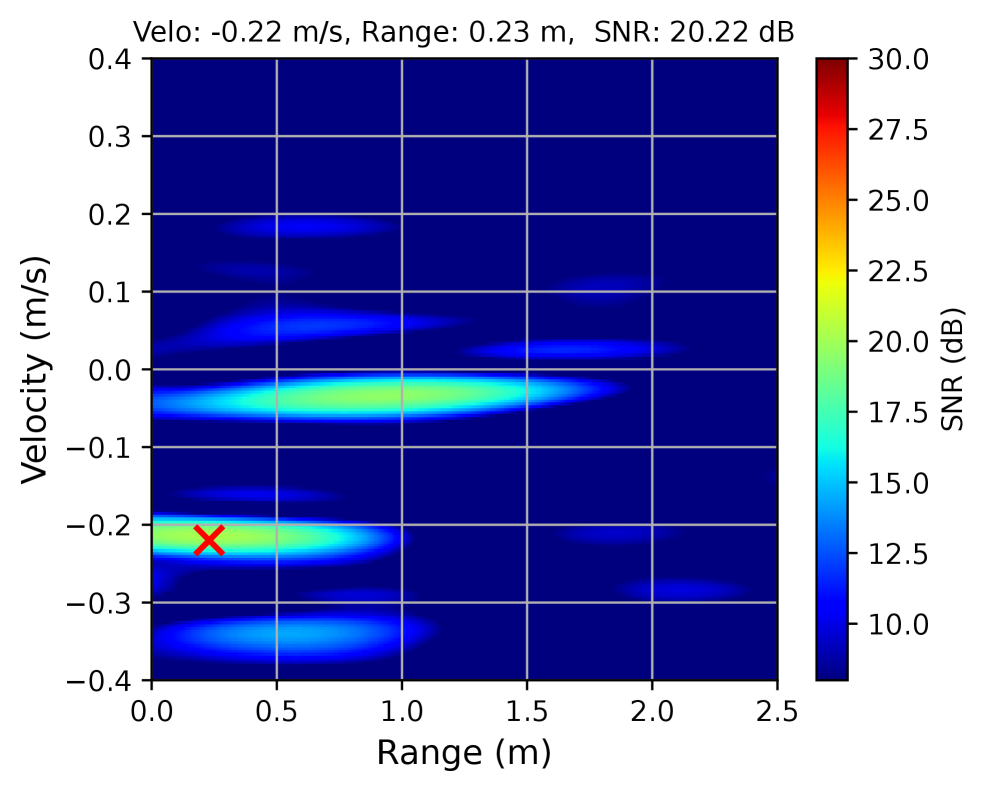 Figure 3: LiveSense demonstrating its ability to detect and differentiate multiple targets even in a crowded, Wi-Fi-heavy environment.
🌍 What Others Are Working On
The field of autonomous systems and drone technology is rapidly evolving, and LiveSense fits perfectly into this landscape by offering a novel sensing modality.
- Enhanced Obstacle Avoidance: For instance, the paper "Fly360: Omnidirectional Obstacle Avoidance within Drone View" by Xiangkai Zhang, Dizhe Zhang, WenZhuo Cao et al. explores sophisticated ways for UAVs to avoid obstacles from all directions. LiveSense's Wi-Fi sensing could provide a powerful complementary layer to such systems, detecting objects even when visual sensors are obscured or in non-line-of-sight scenarios, enhancing overall safety and navigation robustness.
- Efficient AI on Edge Devices: Deploying complex AI models on resource-constrained drones is a constant battle. This challenge is addressed in "Penguin-VL: Exploring the Efficiency Limits of VLM with LLM-based Vision Encoders" by Boqiang Zhang, Lei Ke, Ruihan Yang et al.. LiveSense's approach of extracting sophisticated sensing from COTS hardware aligns with the need for efficient, optimized processing on edge devices. Combining LiveSense's data with efficient AI models could unlock new levels of drone intelligence without heavy computational overhead.
- Multisource Data Integration: Autonomous systems, especially for complex tasks like self-driving cars (and by extension, drones), thrive on integrating data from multiple sensor types. The research "Modeling and Measuring Redundancy in Multisource Multimodal Data for Autonomous Driving" by Yuhan Zhou, Mehri Sattari, Haihua Chen et al. delves into how to effectively combine data from various sources. LiveSense introduces a new, non-traditional sensing modality (Wi-Fi). Understanding how this Wi-Fi data can be fused with traditional drone sensors like cameras, IMUs, and GPS will be crucial for building truly robust and comprehensive drone perception systems that can handle any environment.
🔮 Final Thought
LiveSense pushes the boundaries of what we thought was possible with everyday Wi-Fi technology. As drones become more autonomous and integrated into our lives, imagine the possibilities when their "eyes" and "ears" are powered by the very signals that connect our world. Could your next drone's most powerful sensor be hiding in plain sight, right within its communication chip?
📄 Paper Details
Title: LiveSense: A Real-Time Wi-Fi Sensing Platform for Range-Doppler on COTS Laptop Authors: Jessica Sanson, Rahul C. Shah, Maximilian Pinaroc, Cagri Tanriover, Valerio Frascolla Published: March 2026 arXiv: 2603.06545 | PDF
Written by
The Flight DeskSharing knowledge about drones and aerial technology.